

 【关注川源科技HiCY】
-

 服务热线 400-700-2017
服务热线 400-700-2017
服务热线 400-700-2017
搜索更多信息
1. Research Background
Lithium-ion batteries (LIBs) have made significant progress as the core power source for electric vehicles (EVs) and many portable devices. However, with the increase in battery energy density, safety issues, especially thermal runaway (TR) events, remain the main bottleneck affecting the widespread application of batteries. Thermal runaway can cause batteries to spontaneously combust or explode, greatly threatening the safety and reliability of batteries. Although many studies have explored the causes and mechanisms of thermal runaway in depth, the real-time observation of thermal runaway and its propagation process are still relatively limited.
Existing research methods, such as synchrotron radiation X-ray scanning technology, can provide details of the thermal runaway process, but due to the expensive equipment and inconvenience of widespread application, it is difficult to meet the industry's demand for large-scale, low-cost thermal runaway observation technology. Therefore, developing a simple, easy-to-operate, and laboratory-implemented in-situ thermal runaway observation method is crucial to improving the safety of lithium batteries.
2. Summary
This study proposed a new in-situ observation method for thermal runaway of lithium-ion battery electrodes triggered by high-frequency induction heating. Through a homemade tempered glass container, the researchers were able to observe the entire process of thermal runaway and its propagation in real time. The experimental results show that all samples showed obvious gas exhaust during the thermal runaway process, and as the thermal runaway propagated, dendritic ablation marks appeared on the diaphragm. Gas flow paths, spark drift, short-circuit propagation, and electrolyte boiling were also observed during the experiment. Through CT scanning and disassembly analysis, the research team further revealed the cracks and holes on the surface of the copper foil, confirming the overheating and melting of the copper foil during the thermal runaway process. These findings provide a new perspective for a deeper understanding of the propagation behavior of thermal runaway in lithium-ion batteries and will help develop safer battery designs in the future.
3. Content Description
3.1 Experimental setup and methods
In order to efficiently trigger and observe the thermal runaway process, the research team designed an experimental device combined with high-frequency induction heating. The experimental device includes a transparent tempered glass container with an electromagnetic induction heating coil installed inside the container. The high-frequency current is used to heat up the battery electrodes, thereby triggering a thermal runaway reaction. The design of the container allows researchers to directly observe the changes inside the battery from the front through a camera, ensuring the transparency and operability of the experimental process.
A 50 Ah commercial lithium-ion soft pack battery was used in the experiment, which was disassembled after charging. The positive electrode, negative electrode and separator of the battery were placed in a tempered glass container in sequence, and an appropriate amount of electrolyte was added. The container was sealed and placed in a drying room to ensure that the adhesive was completely dry. After the preparation work was completed, the battery was heated by a high-frequency induction heating coil to trigger thermal runaway, and a high-definition camera was used to record real-time video of the entire process.
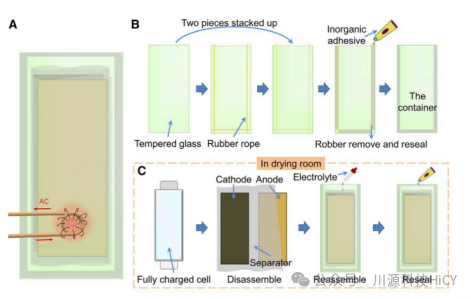
Figure 1. Schematic diagram of in-situ observation based on a self-made tempered glass observer
3.2 Data Collection and Analysis
During the experiment, the camera recorded the key phenomena in the thermal runaway process, such as gas emission, spark drift, short circuit propagation and electrolyte boiling. In order to further analyze the mechanism of thermal runaway, the research team conducted CT scanning and disassembly analysis on the battery wreckage after the experiment. CT scanning helped the team observe the damage of the copper foil layer inside the battery, including wavy cracks and uneven holes on the surface, while the disassembly analysis revealed that the diaphragm and negative electrode materials were almost completely destroyed.
In addition, the researchers also performed a 3D reconstruction analysis of the surface damage of the copper foil, and identified the damaged areas of the material during the thermal runaway process by comparing the grayscale values of different copper foil layers. With this data, the team was able to accurately determine the path and characteristics of thermal runaway propagation, and further explore phenomena such as short circuit propagation and spark drift.
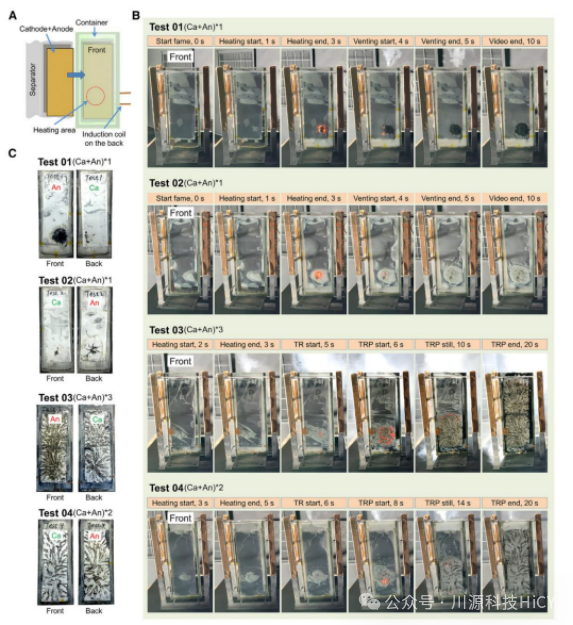
Figure 2. Results obtained from the vessels in Test 01 and Test 02 after triggering TR in the cathode, separator, and anode layers
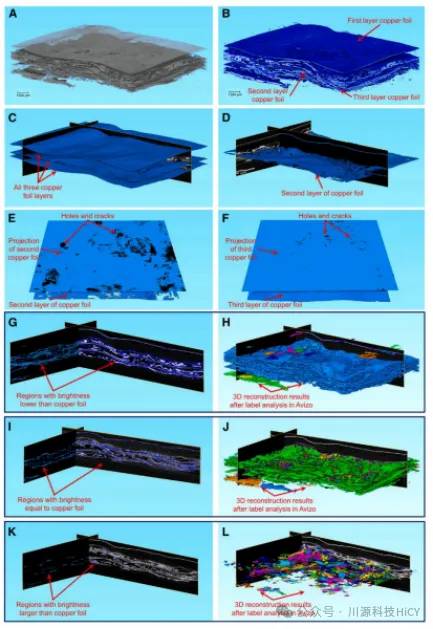
Figure 3. Analysis of fragment CT scan test results for Experiment 03
3.3 Results and Discussion
Through the analysis of experimental data, the research team came to several key conclusions. First, the experimental results show that thermal runaway will only occur and propagate when the number of stacked layers of positive and negative electrodes of the battery reaches or exceeds two layers. All samples showed outgassing, and as the thermal runaway expanded, typical dendritic ablation marks appeared on the diaphragm. In particular, the thermal shrinkage of the diaphragm on the anode side was more obvious, which may be related to the uneven internal temperature distribution of the battery during thermal runaway.
Secondly, the results of CT scanning and disassembly analysis further confirmed that during the thermal runaway process, wavy cracks and holes will appear on the surface of the copper foil, indicating that the copper foil is overheated and melted. Through 3D reconstruction, the research team was able to show in detail the damage of different layers of copper foil and further analyze the grayscale differences in different areas, thus clarifying the specific impact of thermal runaway on battery materials.
Finally, the rapid propagation of short circuits and spark drift were observed during the experiment, indicating that the spread of thermal runaway is not only local, but can quickly affect other parts of the battery and trigger a series of chain reactions. The boiling of the electrolyte shows that the chemical reactions during thermal runaway pose a serious threat to the stability of the battery.
4. Conclusion
The method of combining high-frequency induction heating with in-situ observation proposed in this study provides an important new perspective for a deeper understanding of the propagation process of thermal runaway in lithium-ion batteries. The experimental results reveal several key phenomena in the thermal runaway process, including gas emission, spark drift, short-circuit propagation, and electrolyte boiling. These findings provide valuable reference data for future battery design and safety assessment. With the deepening of research, thermal management strategies based on this technology are expected to provide new solutions for improving the safety of lithium batteries in the future, thereby promoting the safe use of electric vehicles and energy storage systems.
Literature Source
Jin, Changyong, Yuedong Sun, Yuejiu Zheng, Jian Yao, Yu Wang, Xin Lai, Chengshan Xu, Huaibin Wang, Fangshu Zhang, Huafeng Li, Jianfeng Hua, Xuning Feng, and Minggao Ouyang. “In situ observation of thermal runaway propagation in lithium - ion battery electrodes triggered by high - frequency induction heating.” Cell Reports Physical Science 4, no. 7 (2023).
HiCY multi-channel in-situ expansion force testing system is based on a creative synchronous multi-channel mechanism and a new fully closed-loop intelligent servo control system. It integrates high-precision displacement, voltage, current, pressure, temperature and humidity core sensors to achieve expansion force, expansion force distribution and expansion thickness detection under simulated constant gap, constant pressure, mixed mode and real battery working conditions.
Follow us to learn about the latest trends in the battery testing industry
For business consultation, please call our service hotline
400-700-2017